

What is alimony? a.k.a maintenance. a.k.a. spousal support. 👉 Read on to brush up on the basics of all things alimony. What it it. Why it matters. What to do about it.
Let’s define “alimony”
Alimony → Financial support from one ex-spouse to the other post-divorce.
Every state has its own rules for spousal support, like who qualifies, when they qualify, and how long you need to have been married to get it. But in every case, one spouse has to show they need support, and their ex must have the ability to pay. If you can prove both, you might qualify for at least temporary alimony during your divorce.
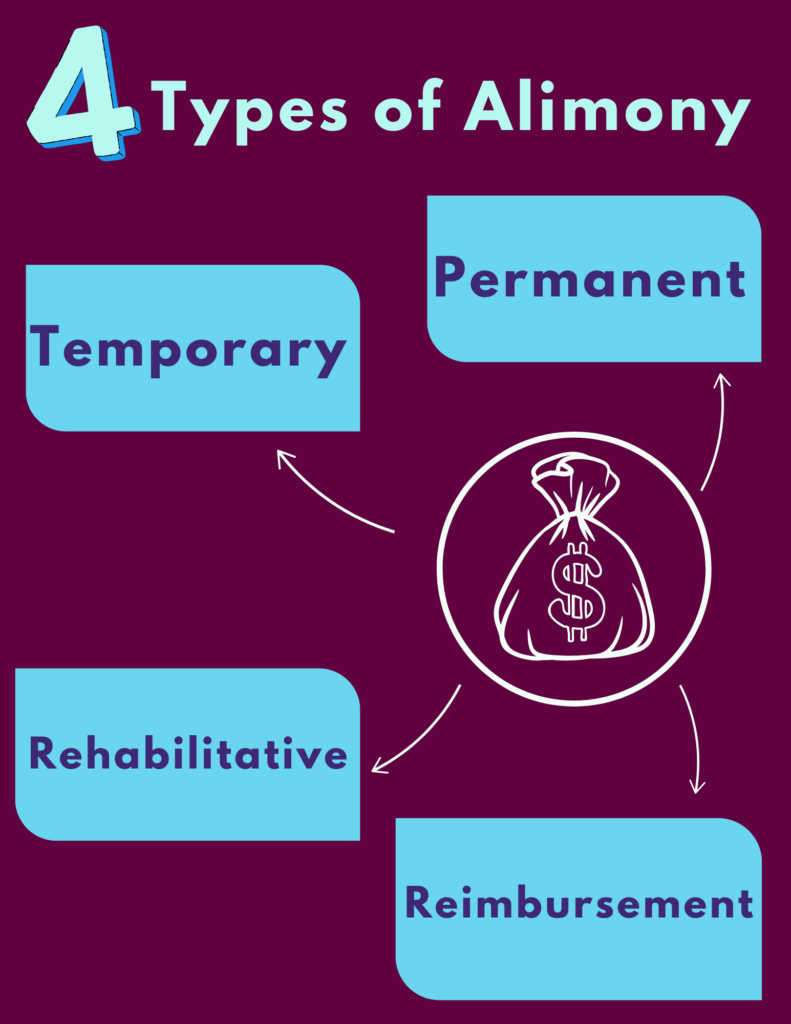
Types of spousal support/alimony
- Temporary Support – This type is awarded during the divorce process. It’s meant to help the lower-earning spouse with housing, living costs, and legal fees until the divorce is finalized. After that it may end or shift to another type.
- Permanent Support– Rare but still possible in long-term marriages, especially if one spouse can’t become financially self-sufficient due to age, health, or other factors. Permanent alimony usually ends if the recipient remarries or die. It can be adjusted if circumstances change.
- Rehabilitative Support – This support is temporary and meant to help the receiving spouse get the skills, education, or training they need to be financially independent. It’s common when one spouse paused their career during the marriage.
- Reimbursement Support – This type repays a spouse for financial sacrifices made during the marriage, like supporting the other’s education or career. It’s often awarded in a lump sum or regular payments, acknowledging the financial investment they made in their partner’s growth.
Factors that determine how much and for how long
🔑 Key Alimony Tip 👉 it all comes down to need and ability to pay. For alimony to be granted, one spouse needs to show that they need financial support, and the other must have the money to pay it.
Judges evaluate each spouse’s monthly income, expected expenses, and earning potential to decide if alimony is appropriate and, if so, how much.
Marriage Length – The length of your marriage often plays role in alimony awards. Longer marriages may be more likely to see long-term or even permanent alimony.
Income Differences – Income and future earning potential factor into alimony awards. Alimony aims to balance out big income or earning potential gaps between spouses.
Lifestyle During Marriage – Alimony often considers the standard of living you had during the marriage, with the goal of helping the lower-earning spouse maintain a similar lifestyle.
Contributions & Sacrifices – Judges also consider any financial and non-financial contributions, like career sacrifices, support for education, or child-rearing, when calculating alimony payments.
👉 And Don’t Forget 👉 Each case is unique, and there’s no strict formula for calculating alimony. Amounts can vary widely from judge to judge. (IE Some may consider a spouse’s personal savings or investments when setting support, while others may not.)
Alimony rules differ by state—Talk to a Pro about your specific situation
We wish we could give you clear, hard-and-fast facts about alimony, but the truth is that is differs with each state. Be aware of this before filing for a divorce or drawing up a settlement agreement, and make sure your lawyer knows how to navigate this.
So what do you do with this? → Find professionals that will support you and guide you through this process. When looking for lawyers, make sure to find ones who are experienced in alimony/spousal support issues.
→ Go to Find a Professional and check out the constantly-updated library of professionals. Check out more of our resources above. Follow us on social.
Divorce is tough. You’re tougher 💪